Showing posts with label horror films. Show all posts

Friday, 16 October 2020

Mark of the Wolfman aka Frankenstein's Bloody LIES!


 Breather was a bit longer than anticipated. But I return.

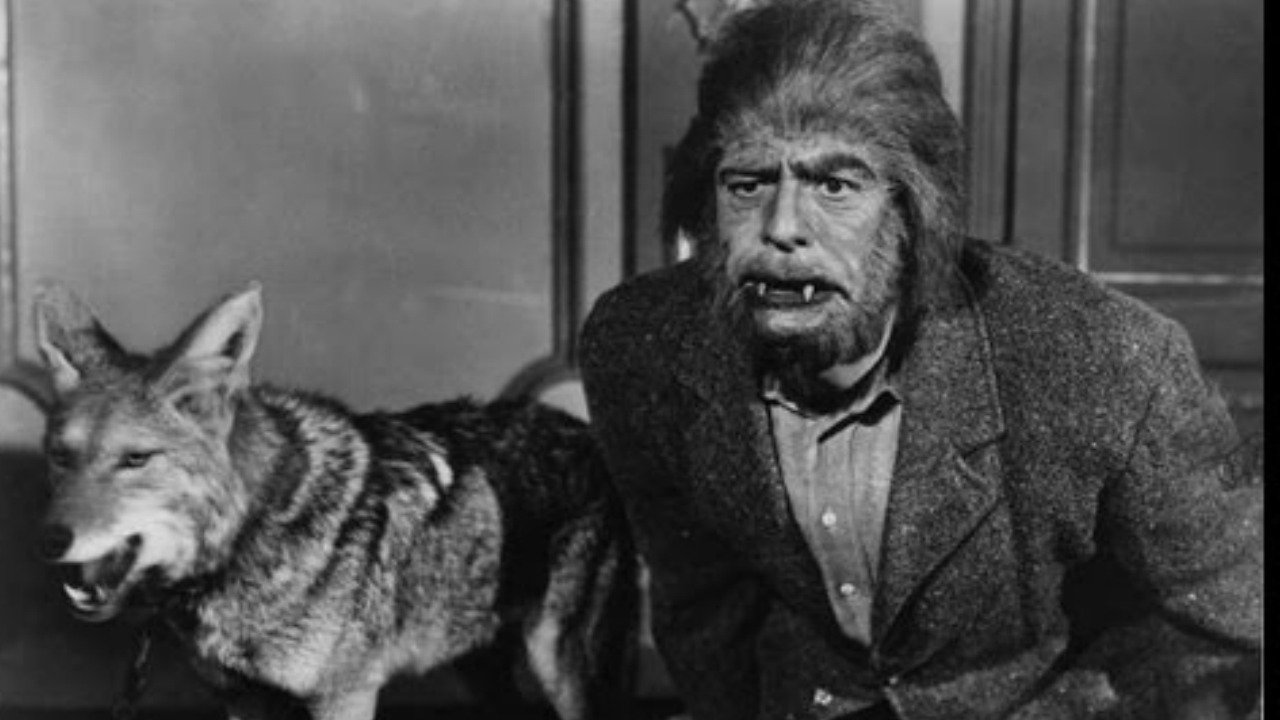
 Spain’s Paul Naschy is a name that’s popped up quite a few times when compiling a list of werewolf movies to watch – it seems, to date, that he’s portrayed werewolves more than any other actor. Real name Jacinto Molina Alvarez, he was advised to change his name for international markets by the German distributors of this, his first werewolf move and also his first appearance as the mysterious Waldemar Daninsky. He would play the part another 11 times, each film unconnected to the others, So, he could be killed at the end of one film and then just turn up in the next with no explanation; not unlike Lawrence Talbot and Dracula in House of Dracula (1945), after they were seemingly permanent demises in House of Frankenstein (1944). Logic’s not always great, and that’s just as applicable here in La marca del hombre lobo (1968), which translates as Mark of the Wolfman. The version I managed to see was actually titled Frankenstein’s Bloody Terror and promises a Frankenstein Monster which becomes a wolfman!  This does not happen. Nope.


 Waldemar is bitten by a formerly dead werewolf, of the family Wolfstein (as close as this affair gets to the broken promise of a lycanthropic Frankenstein), after he is accidentally by a drunken Romani couple seeking shelter in his ruined castle. Now cursed, he seeks help from his two “friends”, Rudolph and Janice, only after stealing Janice from Rudolph, as is the way with mysterious chaps like himself. They call on two strange doctors, who claim they can help cure Waldemar, but in fact turn out to be vampires who want Waldemar’s werewolf for, well, it’s never really explained. Even less makes sense after this turn of events, with the original werewolf somehow resurrected again for purposes as unclear as anything else.

   The version of the film I saw was dubbed, atrociously, with the entire soundtrack replaced with some weird 60s sounds that were quite distracting. I’d be interested in seeing it in the original Spanish, with its original soundtrack intact. Scenes in this version also play out strangely, sometimes just ending. Other times characters appear in the next scene in a totally different location, seemingly at the same time, and then they jump back conveniently to the original location, as though someone got happy with a razor blade if re-editing for other markets. Hairstyles change sometimes instantenously between scenes that take place immediately after the previous one. I cannot stand dubbed films, unless they involve Kaiju in the 1960s (gimme some of that Showa Toho energy!). But this kind of dubbed crap appraoch is the ultimate phoniness.

 There’s a decent sense of gloom across the film, even with the garish and slightly overdone production design. We get treated to Waldemar’s first transformation through a weird, blurry lens effect. The make up design is not bad, clearly your average wolfman, but the difference is in Naschy’s wild performance, as he jerks unpredictably from side to side, almost like a crab, on his haunches. His first victims, who coincidentally speak to each other about werewolves just as Waldemar burst into their cottage and engages in what a police report might refer to as a frenzied and sustained attack. Naschy’s werewolf is a little dynamo, full of manic energy. He would play the part again and I’m intrigued as to what the rest of his films are like.But good to see werewolf films from other parts of the world.

Monday, 12 October 2020

Moon Shadows & Dust - Curse of the Werewolf


Moving on to the 1960s, it wasn’t just the US studios who were going back to the werewolf well. And this is, I think, my first non-US werewolf film of this blog series. UK studio, Hammer, was beginning to carve out a solid reputation as horror filmmakers, after The Curse of Frankenstein (1957), Dracula (1958) and The Mummy (1959) amongst others, and so it was only natural to turn to the next obvious monster icon, the Werewolf. But no Christopher Lee as the titular monster here. Hammer were after younger blood for this beast.


1961’s Curse of the Werewolf is another one of those films I’ve been wanting to see since I was a kid. The images of Oliver Reed’s werewolf were striking, with that kind of contained cruelty I felt Reed’s face contained now fully unleashed; I always felt intimidated just by his face, no matter the role. But this was quite the disappointment. It takes a full 50 minutes for Reed to even appear in the film, with the first half dealing with the origins of his characters, Leon, being born of a mute serving girl (Yvonne Romain) who was raped by a mad imprisoned beggar, in 18th century Spain. Given sanctuary by a kindly don (Clifford Evans), she dies in childbirth and Leon’s baptism is accompanied by lightning and a demonic presence. This werewolf’s curse is bestowed upon his baptism, giving the proceedings a very Catholic guilt/original sin feeling. Once again, our werewolf has done nothing to deserve his curse, other than being conceived in violence and born on Christmas Day.


What follows when Reed does turn up, is the kind of stuff we’d expect to see far earlier in the film, giving the whole thing a very odd pace. The first half is slow as hell while the second half feels rushed. Bright Young Thing of the time, Oliver Reed’s performance seems dominated by histrionics and director Terence Fisher doesn’t seem to realise the pure threat contained in Reed’s general demeanour. Roy Ashton’s make-up allows Reed’s performance to show through (the fur looks very different than anything I've seen so far, wiry and feral) but it’s also very blocky in its design, looking like he can’t turn his head. It does cut a fine silhouette, though, and works well in a great close shot where he hauls himself into a bell tower in the film’s climax. This make-up does seem more savage in its appearence to me and there is far more blood in this film than in any previous werewolf films I've watched - the BBFC were not happy about this film. But, Curse of the Werwwolf could have been so much better with a differently structured screenplay to give it all a bit of breathing space. As such, there’s not a great deal of tension and it's ultimately disappointing. But it’s a Hammer film, so there is obviously an appearance from Michael Ripper, which is always oddly comforting.

Saturday, 3 October 2020

The Monster is Mad


The Mad Monster (1942) looks like exactly what it is: a cheap quickie attempt to cash in on the success of The Wolf Man the previous year. Starring English actor George Zucco as a mad scientist hell bent on eliminating his enemies via innocent Petro (Glenn Strange), his dim witted assistant to whom he has been administering a drug made from the blood of wolves which turns him into, you guessed it, a werewolf.

Where this differs from other early werewolf movies is that it functions as a werewolf creation tale. The idea of the werewolf is centuries old and its cinematic depiction normally deals with an ancient curse passed on through injury. But here we have an actual “scientific” origin for our featured werewolf, having been injected with some concoction created form the blood of wolves, an idea not dissimilar to the one introduced but never explored in Wolf Blood – A Tale of the Forest (1925). Well, maybe an origin in the same way Prometheus (2012) is a xenomorph origin. Or not...

Our villain here is not a curse but a mad scientist, George Zucco’s Dr Lorenzo Cameron, who engages in activity that might arouse the interest of H.G. Wells’ Doctor Moreau, but without any desire to test what it means to be human. Here, Dr Cameron is all about creating an army of monster men that he can use as a weapon, his first targets being his fellow scientists who mocked him. Revenge!! Kind of a dress rehearsal for Bela Lugosi’s crazed scientists as featured in some of Edward D. Wood’s later z movies, like Bride of the Atom (1955). Zucco’s tirade against his imagined enemies is fairly amusing. A scene where a young girl is killed has potential but is squandered in subsequent scenes as the bereaved family seems, well, fine.

Waching the match with furry friend.

One of the few redeeming features of this mostly enjoyable cheapie is that it does make Bride of the Atom look good. Strange’s werewolf lumbers around the same 30 odd square foot of forest/swamp, searching around a bit randomly without a hint of animal about him, a few snarls aside, unlike Lon Chaney Jr’s hunched, animal-like gait from the year before. He just looks like a hairy bloke who’s lost And Strange’s make-up really hasn’t much going for it either. Petro wears a pretty rotten wig in his human form as it is, while his lupine form finds itself with some hair glued to the face, false teeth and maybe a bit of a heavier brow. It looks cheap and perhaps sets a standard for cost effectiveness when depicting werewolves. Harry H. Corbett’s werewolf from Carry on Screaming seems to have gotten its cues from here.

Strange’s Petro also ironically seems t channel a different Chaney Jr role, that of Lennie from 1939’s Of Mice and Men, right down to the dungarees. Petro’s shape is that of a hulk, with ridiculously broad shoulders adding to Strange’s already imposing 6’3’’ height. There is a slightly different approach to some of the transformation scenes, where Petro's head slumps down as he falls asleep.One crafty dissolve later and he raises his head to reveal the monster they paid for.

Werewolf in a hat. As you do.

Production value is stretched, the script is flat, shouldering the cast with some abominable lines that sound like they shouldn’t be spoken, and scenes kind of just end. After the glory of a couple of Universal monster movies, the next film was bound to slip, even though Glenn Strange was about to find some success of his own in following in Boris Karloff's oversized footsteps as Frankenstein's monster. But The Mad Monster is mostly rubbish on its own terms.