Friday, 16 October 2020

Mark of the Wolfman aka Frankenstein's Bloody LIES!


 Breather was a bit longer than anticipated. But I return.

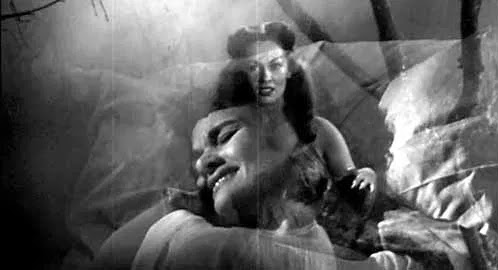
 Spain’s Paul Naschy is a name that’s popped up quite a few times when compiling a list of werewolf movies to watch – it seems, to date, that he’s portrayed werewolves more than any other actor. Real name Jacinto Molina Alvarez, he was advised to change his name for international markets by the German distributors of this, his first werewolf move and also his first appearance as the mysterious Waldemar Daninsky. He would play the part another 11 times, each film unconnected to the others, So, he could be killed at the end of one film and then just turn up in the next with no explanation; not unlike Lawrence Talbot and Dracula in House of Dracula (1945), after they were seemingly permanent demises in House of Frankenstein (1944). Logic’s not always great, and that’s just as applicable here in La marca del hombre lobo (1968), which translates as Mark of the Wolfman. The version I managed to see was actually titled Frankenstein’s Bloody Terror and promises a Frankenstein Monster which becomes a wolfman!  This does not happen. Nope.


 Waldemar is bitten by a formerly dead werewolf, of the family Wolfstein (as close as this affair gets to the broken promise of a lycanthropic Frankenstein), after he is accidentally by a drunken Romani couple seeking shelter in his ruined castle. Now cursed, he seeks help from his two “friends”, Rudolph and Janice, only after stealing Janice from Rudolph, as is the way with mysterious chaps like himself. They call on two strange doctors, who claim they can help cure Waldemar, but in fact turn out to be vampires who want Waldemar’s werewolf for, well, it’s never really explained. Even less makes sense after this turn of events, with the original werewolf somehow resurrected again for purposes as unclear as anything else.

   The version of the film I saw was dubbed, atrociously, with the entire soundtrack replaced with some weird 60s sounds that were quite distracting. I’d be interested in seeing it in the original Spanish, with its original soundtrack intact. Scenes in this version also play out strangely, sometimes just ending. Other times characters appear in the next scene in a totally different location, seemingly at the same time, and then they jump back conveniently to the original location, as though someone got happy with a razor blade if re-editing for other markets. Hairstyles change sometimes instantenously between scenes that take place immediately after the previous one. I cannot stand dubbed films, unless they involve Kaiju in the 1960s (gimme some of that Showa Toho energy!). But this kind of dubbed crap appraoch is the ultimate phoniness.

 There’s a decent sense of gloom across the film, even with the garish and slightly overdone production design. We get treated to Waldemar’s first transformation through a weird, blurry lens effect. The make up design is not bad, clearly your average wolfman, but the difference is in Naschy’s wild performance, as he jerks unpredictably from side to side, almost like a crab, on his haunches. His first victims, who coincidentally speak to each other about werewolves just as Waldemar burst into their cottage and engages in what a police report might refer to as a frenzied and sustained attack. Naschy’s werewolf is a little dynamo, full of manic energy. He would play the part again and I’m intrigued as to what the rest of his films are like.But good to see werewolf films from other parts of the world.

Tuesday, 13 October 2020

A Breather

 No werewolf film blog tonight, so you're all spared more of my inane, shallow babbling.

I'm a few films ahead, and family and work have exhausted me today.

See ya's tomorrow for some Paul Naschy madness.


B

Monday, 12 October 2020

Moon Shadows & Dust - Curse of the Werewolf


Moving on to the 1960s, it wasn’t just the US studios who were going back to the werewolf well. And this is, I think, my first non-US werewolf film of this blog series. UK studio, Hammer, was beginning to carve out a solid reputation as horror filmmakers, after The Curse of Frankenstein (1957), Dracula (1958) and The Mummy (1959) amongst others, and so it was only natural to turn to the next obvious monster icon, the Werewolf. But no Christopher Lee as the titular monster here. Hammer were after younger blood for this beast.


1961’s Curse of the Werewolf is another one of those films I’ve been wanting to see since I was a kid. The images of Oliver Reed’s werewolf were striking, with that kind of contained cruelty I felt Reed’s face contained now fully unleashed; I always felt intimidated just by his face, no matter the role. But this was quite the disappointment. It takes a full 50 minutes for Reed to even appear in the film, with the first half dealing with the origins of his characters, Leon, being born of a mute serving girl (Yvonne Romain) who was raped by a mad imprisoned beggar, in 18th century Spain. Given sanctuary by a kindly don (Clifford Evans), she dies in childbirth and Leon’s baptism is accompanied by lightning and a demonic presence. This werewolf’s curse is bestowed upon his baptism, giving the proceedings a very Catholic guilt/original sin feeling. Once again, our werewolf has done nothing to deserve his curse, other than being conceived in violence and born on Christmas Day.


What follows when Reed does turn up, is the kind of stuff we’d expect to see far earlier in the film, giving the whole thing a very odd pace. The first half is slow as hell while the second half feels rushed. Bright Young Thing of the time, Oliver Reed’s performance seems dominated by histrionics and director Terence Fisher doesn’t seem to realise the pure threat contained in Reed’s general demeanour. Roy Ashton’s make-up allows Reed’s performance to show through (the fur looks very different than anything I've seen so far, wiry and feral) but it’s also very blocky in its design, looking like he can’t turn his head. It does cut a fine silhouette, though, and works well in a great close shot where he hauls himself into a bell tower in the film’s climax. This make-up does seem more savage in its appearence to me and there is far more blood in this film than in any previous werewolf films I've watched - the BBFC were not happy about this film. But, Curse of the Werwwolf could have been so much better with a differently structured screenplay to give it all a bit of breathing space. As such, there’s not a great deal of tension and it's ultimately disappointing. But it’s a Hammer film, so there is obviously an appearance from Michael Ripper, which is always oddly comforting.

Sunday, 11 October 2020

Day of the 50s Werewolf – 3 In A Row

 Blimey. I managed three of the buggers in a row today. All from the 1950s.


 Leaving behind the classic monsters of the 1930s and 40s, linear time and all that guff dictates that we move on to the 1950s. There had been a gap of around 8 years by the time anyone in the US seemed to think of making another werewolf film and times had changed. The age of the A Bomb and fear of the Red Menace had moved fantasy filmmaking into the era of classic science fiction, and monsters still ruled the roost. But they weren’t all to be the inhabitants of flying saucers; 1956 saw the return of the werewolf in the wonderfully titled The Werewolf. It tells the tale of an apparent amnesiac who wanders into a typical small town in the mountains (the wiki page for this film is rather overly preoccupied with nailing down the actual locations) and gets mugged, only to turn into a werewolf and then do what it is that werewolves tend to do best. The locals gather round and re-enact a scene we know only too well, with dialogue we know only too well; “His throat’s been ripped out. Only an animal could do this sort of thing. But what kind of an animal?” Or words to that effect.

  But this werewolf doesn’t rely on any curse of moonlight as the poor sod is the survivor of a car crash who has been treated/experimented on by a doctor who believes that the human mutations caused by the coming nuclear bombs can only be combated by creating human/animal hybrids. So far, so The Mad Monster. But his patient escapes, so he and his dimmer colleague set out to kill him before anyone finds him, like a torch wielding mob…er, sorry, a bunch of sheriffs and local hunters. There is definitely more of an air of science fiction about this, rather than the pure horror of most previous entries into the sub-genre, with our monsters and mad doctors given new motivations while maintaining the werewolf’s victim status, a ’la Lawrence Talbot. It’s not wonderful and the make up on the werewolf stretched mostly to hair and greasepaint, with a shiny black nose painted on. And the dissolves during the transformations are pretty poor, with the actor’s eyes and mouth shifting positions significantly, matching not very much. But the monster was back.


 The following year saw the returning monster return to a period piece with Edgar G. Ulmer’s Daughter of Dr, Jekyll (1957). A clearly low budget creates limitations, but Ulmer’s direction tries to make the most of what is a pretty terrible script, with some interesting dream sequences. Our lead, Janet Smith (Gloria Talbot) and her fiancĂ©, George, arrive at Janet’s ancestral home, greeted by the doctor resident there, a cheerful Arthur Shields as Dr Lomas, who gives Janet the good news that she is about to inherit the house and a fortune. Unfortunately, she is also about to he told that she is the daughter of one Dr Henry Jekyll, and that she may also have inherited his madness. Oh, and Mr Hyde was a werewolf…


What the hell is going on here? Since when was Hyde a werewolf? And since when did a wooden stake kill a werewolf? And since when did werewolves lie in their coffins all day, looking as young as they day they became werewolves thanks to the blood they drink? All part of the confused guff this script adds to the mix. The word vampire is never mentioned. But Janet is becoming convinced somehow that she is also a werewolf, and it doesn’t take long to realise who the real culprit is and that this could also be construed as a remake of She Wolf of London. Except with an actual werewolf.


 The werewolf make-up is sparse – drawing hair on hands with greasepaint is and unusual approach. The beast is featured in the opening and closing moments of the film, breaking the fourth wall in a ridiculous manner, so there’s not a huge amount of anticipation. A detailed but horrendously filmed miniature of the grand house gets some serious mileage and you can even see passing traffic in the window of the house at some points. Ulmer tries, but the limitations here get the better of everyone.


  Growing up in the 1970s and 1980s, Michael Landon was either Little Joe from the never-ending 60s Western TV show, Bonanza, or he was Pa Ingalls on Little House on the Prairie, all big hair and good advice. I guess he was the latter for me as I remember my dad loving that show on a Sunday morning. So, I was surprised in my early teens to discover that Landon was also a teenaged werewolf in the coincidentally entitled B movie, I Was A Teenage Werewolf (1957). Here, he’s troubled young lad Tony, who has some serious anger issues that wind him up in the office of the respected but also completely mad Doctor Brandon (Whit Bissell). Dr Brandon sees an opportunity in Tony’s nature to conduct a secret experiment that will revert Tony to a feral form – another mad scientist who wants to alter humanity to whatever reason, like The Werewolf (1956). Why Tony reverts to a canine form instead of an ape is really not worth following up. I felt sorry for his widowed father more than anyone else. The film seems to think that single parent homes result in terrible behaviour, with the ideal of the nuclear family being seen as more wholesome in the 50s.

 The 50s brought a lot of new fears, not just of communism and atomic war, but of teenagers, and here that fear is not only on display for exploitation, but it succeeded in appealing to the very people it was demonising – teenaged moviegoers. James Dean never had it like this. And definitely never slavered like the angry lad on show here.They overdo it on that particular front.

 Another thing about growing up in the 80s was the card game, Top Trumps. The horror version was really popular, and its version of the werewolf was indeed a depiction of Michael Landon’s hairy troublemaker. It sat alongside a T-Rex from the Land That Time Forgot with a suit and bow tie as a hilariously wrong Godzilla, so it was more of the visually accurate cards. Seriously, WTF was up what that?